It was late spring, 1981. The classroom was unairconditioned and very hot. It was an introductory journalism class, and I was a bored high school junior. My friend Curtis and I had been amusing ourselves by having a stapler fight. It ended when he stapled my jeans to my leg. Mrs. Wiggins, our teacher, reminded us that our sports stories were due in two days and that we should get to work. Curtis and I eventually huddled up talking about sports and trying to cultivate ideas.
Half an hour later, Curtis drifts over close to Mrs. Wiggins' desk.
He nods in my direction as he whispers, "Mrs. Wiggins, have you heard about the record his dad held in track?"
"No," she says, growing attentive, proud that her students were making the connection between their lives and the assignment.
"Yeah, he ran like a four-minute mile or something. You should ask him about it; he's pretty proud of it."
A few minutes later, Mrs. Wiggins nonchalantly wanders by, smiling.
"I understand your dad held a record in the mile when he was in high school."
I freeze. Nothing moves. I stare at my desk for awhile, while a look of horror creeps across my face. Tears well up as I raise my head to give her a look of pain and complete astonishment. Mouth open.
"M-m-my dad doesn't have any legs," I whisper, plunging my head into my hands, and collapsing onto my desk. My body shakes with sobs.
Off in the corner, Curtis is laughing hysterically and pointing at my poor vulnerable back.
"CURTIS," she screams, red-faced, and getting larger by the moment. She is pissed. Right when she grabs him by the neck to bodily remove him from the room, I fall out of my desk, onto the floor, laughing.
She starts toward me to offer motherly comfort, then sees she has been taken for a ride. It had been a short ride, but the top was down and the pedal had been put to the metal, baby.
Both of us spent some time in the principal's office that afternoon; but it was okay, because for two days we were gods. We were the "no legs" guys that almost gave Mrs. Wiggins a heart attack. It was a sweet rep.
What's the lesson in all this? Be very careful of jouralism. It's a dangerous, dangerous business.
Thursday, June 30, 2005


Tuesday, June 28, 2005
NO JUSTIFICATION
Nothing new.
I am sitting here, watching President Bush attempt to justify the war in Iraq. Sad. Very sad. I can't sit idly by while he bobs and weaves to save his skin. Your aggressive move is a sham, sir. You can attempt to divert our attention with red herrings if you wish, Mr. Bush, but you do not make up for the lies upon which you stand.
Justifying the war by detailing all the things you've done since you invaded illegally is not a legitimate argument. You act like the defender of freedom, when you violate international law with your reckless violence.
Do not use the blood of the 9/11 victims to defend your misguided aims. "Your watch" has been wasted. You do not defend freedom. You defend the ideology of the rich and powerful. You defend yourself and your family. You do not defend me.
Don't get me wrong, this is not a partisan issue for me. All you "liberals" out there (Ms. Clinton, Mr. Kerry, and your ilk) that supported this mess from the beginning are equally to blame. Blood is on your hands.
This militarism has been engineered since the early '90s. There is a design to promote democracy through force. I'm not buying it. I'm not buying you, sir. You say, "If evil is not confronted, it rises to face us on another day." I rise to confront you, then, Mr. President. I despise your manipulation of the American people by leading them to believe that lack of support for your violent policies is a rejection of our troops. Shame on you. Shame on you.
Mr. Bush, you say, "We've made progress, but he have a lot more to do." I should say so.
I should say so.
I am sitting here, watching President Bush attempt to justify the war in Iraq. Sad. Very sad. I can't sit idly by while he bobs and weaves to save his skin. Your aggressive move is a sham, sir. You can attempt to divert our attention with red herrings if you wish, Mr. Bush, but you do not make up for the lies upon which you stand.
Justifying the war by detailing all the things you've done since you invaded illegally is not a legitimate argument. You act like the defender of freedom, when you violate international law with your reckless violence.
Do not use the blood of the 9/11 victims to defend your misguided aims. "Your watch" has been wasted. You do not defend freedom. You defend the ideology of the rich and powerful. You defend yourself and your family. You do not defend me.
Don't get me wrong, this is not a partisan issue for me. All you "liberals" out there (Ms. Clinton, Mr. Kerry, and your ilk) that supported this mess from the beginning are equally to blame. Blood is on your hands.
This militarism has been engineered since the early '90s. There is a design to promote democracy through force. I'm not buying it. I'm not buying you, sir. You say, "If evil is not confronted, it rises to face us on another day." I rise to confront you, then, Mr. President. I despise your manipulation of the American people by leading them to believe that lack of support for your violent policies is a rejection of our troops. Shame on you. Shame on you.
Mr. Bush, you say, "We've made progress, but he have a lot more to do." I should say so.
I should say so.
Monday, June 27, 2005
DOES JESUS NEED ACCREDITATION?
Until recently, I served on the accreditation steering committee at the evangelical university where I teach. My responsibility was to help evaluate the organization’s mission and integrity. I resigned from the committee when it became apparent that some in the administration did not desire authentic self-evaluation, and were only interested in accreditation as a marketing device. When I raised questions about an exclusive board of trustees that was entirely appointed by a statewide religious organization, a religion professor who was denied a promotion because of his liberal theology, and our profound lack of racial and ethnic diversity on campus, I was treated like an agitator who was provoking insurrection. It seemed like I was being expected to toe the company line, so I quit.
So, imagine my interest in the recent New Yorker article,
by Hanna Rosin, in which she profiles Patrick Henry College, a fundamentalist Christian school just outside the beltway in Virginia. PHC’s declared mission includes the aim “to prepare Christian men and women who will lead our nation and shape our culture with timeless biblical values and fidelity to the spirit of the American founding.” Not terribly far removed from the mission of numerous Christian colleges. The difference is that PHC is blatantly designed as an incubator for conservative politicos. While the faculty members are well-pedigreed and the students are very smart (many boasting a 1600 on the SAT), the school is heavily endowed by Republican leaders and conservative CEOs who have a vested interest in shaping the country’s ideology. There seems to be a greased conduit from PHC to Capitol Hill and the White House, with Patrick Henry scoring as many internships annually as Georgetown.
Nearly all the students were homeschooled, and come to the college with an evangelical zeal for spreading the fundamentalist gospel of/and conservative Republican ideology. They (or, at least their parents) are also drawn to the extremely rigid moral guidelines and the courtship environment, where romantic relationships are regulated under the watchful eyes of administrators and parents. Students even rebuke each other through campuswide emails for inappropriate displays of affection, or for women tempting their brothers with suggestive attire.
There are only five majors available: government, journalism, literature, history, and classical liberal arts education. The literature major draws mostly women students, who nearly all report that they will not pursue a career, so they can stay home and school their children.
While I would rather play a game of Naked Twister with Karl Rove than send my daughters to such a place, I have no problem with them doing what they do. They have the right to pursue their ideological agenda however they please. What interests me is the manner in which we certify such practices.
What Rosin does not discuss in the article is the problems PHC has had with accreditation. They were denied accreditation by the American Academy for Liberal Education (AALE) based on a biology curriculum that highlights the teaching of six-day creationism (not accepted by the National Academy of Sciences). After breaking ties with the AALE, they finally received accreditation from the Transnational Association of Christian Colleges and Schools, that has certified only about 35 other ultra-conservative institutions. PHC is currently pursuing an application with the Southern Association of Colleges and Schools (SACS), a regional sister to the accrediting body for my university.
If SACS grants them accreditation, it will either mean that PHC has moved away from its militant commitment to a single-minded ideology, or SACS is not fulfilling its declared criteria. Either way, it raises this question: What is the value of accreditation?
If you possess “the truth,” and you are convinced that all your aims are righteous, why would you give a damn about accreditation? I recognize that there are state laws and federal guidelines requiring it, if you accept any kind of support from the government; but it seems like PHC would be quite opposed to any kind of governmental support.
I guess my question concerns the difference between accreditation as compliance/marketing device, and accreditation as communitarian accountability. Receiving accreditation means that your peers at similar universities deem you worthy of certification. If your worldview is so contrary and libertine that you resist any oversight or approval from others, why bother? I suspect that the "more Protestant" an institution, the more reticent it will be to peer-evaluation.
I mean, is it any wonder that those who struggle with accreditation are probably more likely to accuse Democrats of seeking global approval for military acts? By not easily submitting yourself to the review of your academic peers, aren’t you less likely to submit to the will of a body like the U.N.? I don’t think John Bolton is on PHC’s board, but he might be a nice fit.
I am not entirely naïve. I know there are liberal colleges out there doing much the same thing. There are left wing schools where a conservative idea is treated as de facto heresy, and I do not defend them. I find that a repugnant response to the Right. However, in most cases, left-leaning schools demonstrate a greater interest in dialogue and community, where the voice of the minority is structurally—if not always culturally—protected.
So, if Jesus had started a university (perhaps “Fishers of Men Tech”), would he have applied for accreditation. Probably not. And, I suppose, when a faculty and administration reach his level of infallibility they probably don’t need to worry about it either.
So, imagine my interest in the recent New Yorker article,
by Hanna Rosin, in which she profiles Patrick Henry College, a fundamentalist Christian school just outside the beltway in Virginia. PHC’s declared mission includes the aim “to prepare Christian men and women who will lead our nation and shape our culture with timeless biblical values and fidelity to the spirit of the American founding.” Not terribly far removed from the mission of numerous Christian colleges. The difference is that PHC is blatantly designed as an incubator for conservative politicos. While the faculty members are well-pedigreed and the students are very smart (many boasting a 1600 on the SAT), the school is heavily endowed by Republican leaders and conservative CEOs who have a vested interest in shaping the country’s ideology. There seems to be a greased conduit from PHC to Capitol Hill and the White House, with Patrick Henry scoring as many internships annually as Georgetown.
Nearly all the students were homeschooled, and come to the college with an evangelical zeal for spreading the fundamentalist gospel of/and conservative Republican ideology. They (or, at least their parents) are also drawn to the extremely rigid moral guidelines and the courtship environment, where romantic relationships are regulated under the watchful eyes of administrators and parents. Students even rebuke each other through campuswide emails for inappropriate displays of affection, or for women tempting their brothers with suggestive attire.
There are only five majors available: government, journalism, literature, history, and classical liberal arts education. The literature major draws mostly women students, who nearly all report that they will not pursue a career, so they can stay home and school their children.
While I would rather play a game of Naked Twister with Karl Rove than send my daughters to such a place, I have no problem with them doing what they do. They have the right to pursue their ideological agenda however they please. What interests me is the manner in which we certify such practices.
What Rosin does not discuss in the article is the problems PHC has had with accreditation. They were denied accreditation by the American Academy for Liberal Education (AALE) based on a biology curriculum that highlights the teaching of six-day creationism (not accepted by the National Academy of Sciences). After breaking ties with the AALE, they finally received accreditation from the Transnational Association of Christian Colleges and Schools, that has certified only about 35 other ultra-conservative institutions. PHC is currently pursuing an application with the Southern Association of Colleges and Schools (SACS), a regional sister to the accrediting body for my university.
If SACS grants them accreditation, it will either mean that PHC has moved away from its militant commitment to a single-minded ideology, or SACS is not fulfilling its declared criteria. Either way, it raises this question: What is the value of accreditation?
If you possess “the truth,” and you are convinced that all your aims are righteous, why would you give a damn about accreditation? I recognize that there are state laws and federal guidelines requiring it, if you accept any kind of support from the government; but it seems like PHC would be quite opposed to any kind of governmental support.
I guess my question concerns the difference between accreditation as compliance/marketing device, and accreditation as communitarian accountability. Receiving accreditation means that your peers at similar universities deem you worthy of certification. If your worldview is so contrary and libertine that you resist any oversight or approval from others, why bother? I suspect that the "more Protestant" an institution, the more reticent it will be to peer-evaluation.
I mean, is it any wonder that those who struggle with accreditation are probably more likely to accuse Democrats of seeking global approval for military acts? By not easily submitting yourself to the review of your academic peers, aren’t you less likely to submit to the will of a body like the U.N.? I don’t think John Bolton is on PHC’s board, but he might be a nice fit.
I am not entirely naïve. I know there are liberal colleges out there doing much the same thing. There are left wing schools where a conservative idea is treated as de facto heresy, and I do not defend them. I find that a repugnant response to the Right. However, in most cases, left-leaning schools demonstrate a greater interest in dialogue and community, where the voice of the minority is structurally—if not always culturally—protected.
So, if Jesus had started a university (perhaps “Fishers of Men Tech”), would he have applied for accreditation. Probably not. And, I suppose, when a faculty and administration reach his level of infallibility they probably don’t need to worry about it either.
Monday, June 20, 2005
ONE MILLION BAPTISMS
The annual meeting of the Southern Baptist Convention begins tomorrow in Nashville.
I'm all a-twitter. Rosy-cheeked and weak-kneed, I await the genesis of a new day.
I look forward to this event every year. It's more exciting than watching TV or tipping a cow, because you are certain to be entertained. You can absolutely count on the SBC to do something asinine, inflaming the public and distancing themselves even further from the people who need them the most. Whether it is a boycott of Mickey Mouse or another misogynistic assault on women, the hits just keep on coming. This year the convention is set to consider a resolution declaring war on public schools.
Last year some of the SBC leaders proposed a similar measure, but it was just a nebulous attack against godless secularism, so it didn't find traction among the rank and file. This year, co-sponsors of the resolution, Voddie Baucham and Bruce Shortt, are hanging the public school attack on the tried and tested issue of homosexuality. If there's one thing we know will cause Southern Baptists to lunge and froth, it's gays and the gay-lovers who defend them.
It seems that "homosexual activists are aggressively working to transform the moral foundation of our culture," and "any school district that recognizes homosexual clubs or treats homosexuality as an acceptable lifestyle is a clear and present danger to all of its children and is violating the community’s trust." The resolution goes on to advocate a complete exodus from the public schools, creating paranoid enclaves of righteousness in our Christian schools and homes.
Damn gays have to be stopped. If they continue feminizing our children, how will we teach them to torture prisoners and bomb abortion clinics? How will we keep all our uppity women in check if our men get all girly on us? If our children become homosexual, how will they learn to grow up and disgrace the institution of heterosexual marriage at a higher-than-average rate like the rest of us evangelicals?
Bobby Welch, president of the convention, would like to set a goal for this next year of one million new baptisms. It seems that Southern Baptists have experienced a substantial downturn in new converts over the last year or so. I wonder why? Maybe it's because they have strayed so far from Christ's message of unconditional love and forgiveness - in order to advance an aggressive culture war on liberals, infidels, and homosexuals - that the average person sees little difference between them and the people they seem to hate.
Until something fundamental changes, most of the baptisms will be for those who were first immersed in the religion of cultural conservatism, not for those transformed by the extravagant love of God.
I'm all a-twitter. Rosy-cheeked and weak-kneed, I await the genesis of a new day.
I look forward to this event every year. It's more exciting than watching TV or tipping a cow, because you are certain to be entertained. You can absolutely count on the SBC to do something asinine, inflaming the public and distancing themselves even further from the people who need them the most. Whether it is a boycott of Mickey Mouse or another misogynistic assault on women, the hits just keep on coming. This year the convention is set to consider a resolution declaring war on public schools.
Last year some of the SBC leaders proposed a similar measure, but it was just a nebulous attack against godless secularism, so it didn't find traction among the rank and file. This year, co-sponsors of the resolution, Voddie Baucham and Bruce Shortt, are hanging the public school attack on the tried and tested issue of homosexuality. If there's one thing we know will cause Southern Baptists to lunge and froth, it's gays and the gay-lovers who defend them.
It seems that "homosexual activists are aggressively working to transform the moral foundation of our culture," and "any school district that recognizes homosexual clubs or treats homosexuality as an acceptable lifestyle is a clear and present danger to all of its children and is violating the community’s trust." The resolution goes on to advocate a complete exodus from the public schools, creating paranoid enclaves of righteousness in our Christian schools and homes.
Damn gays have to be stopped. If they continue feminizing our children, how will we teach them to torture prisoners and bomb abortion clinics? How will we keep all our uppity women in check if our men get all girly on us? If our children become homosexual, how will they learn to grow up and disgrace the institution of heterosexual marriage at a higher-than-average rate like the rest of us evangelicals?
Bobby Welch, president of the convention, would like to set a goal for this next year of one million new baptisms. It seems that Southern Baptists have experienced a substantial downturn in new converts over the last year or so. I wonder why? Maybe it's because they have strayed so far from Christ's message of unconditional love and forgiveness - in order to advance an aggressive culture war on liberals, infidels, and homosexuals - that the average person sees little difference between them and the people they seem to hate.
Until something fundamental changes, most of the baptisms will be for those who were first immersed in the religion of cultural conservatism, not for those transformed by the extravagant love of God.
Monday, June 13, 2005
SHAKEN, NOT BROKEN
I spent last weekend with my family in Madison, Wisconsin. While none of us actually live in Madison, at least two or three of us will be there over the next month or two.
Nearly 30 years ago, aboard the U.S.S. Lexington, Rick was coming up a ladder at the same time a hatch was coming down. Hatch met head and the result has been three decades of increasingly debilitating seizures. After marrying an incredible woman (my sister), and trying every kind of therapy and medication available, he was accepted as a candidate for a temporal lobectomy at the VA hospital in Madison. He begins with a procedure tomorrow that is designed to open the skull and insert a device designed to make intracranial EEG recordings that are then used to determine exactly where the surgery should be performed. He could emerge seizure-free, but there are obvious risks. It's brain surgery.
Rick has a talent for changing the way those around him view the world. Mostly, he messes with you by refusing to engage in predictable conversation. He is always ready with a one-liner or an odd perspective, delivered in his droll near-mumble. He never responds, "I don't know" to a question. Maybe, "Don't make me lie to you," but never a conventional reply.
If someone begins to rub his shoulders, he is likely to give them the sharp rebuke, "You have exactly 30 minutes to stop that."
And if you mistakenly drink from his water glass, expect to hear, "Don't worry about it, these sores mean nothing."
He is partially responsible for turning me from an insufferably self-righteous apologist to a rhetorical beggar that masquerades a little less frequently as a Pharisee. One summer afternoon, about 20 years ago, when I was at the height of my "I-got-me-some-religion-and-it's-better-than-yours" stage, he stood in my parents' kitchen and declared, "It's not what you're saying so much as how you're saying it." He was right, and I started making changes. I use that line with my students now.
I even wrote a song about him, that will be on a new CD (available soon).
Saturday evening I stood with Rick on the shores of Lake Mendota, having a chat while he smoked one of his trademark unfiltered Camels. It was a good talk, but what struck me about it was the utter lack of desperation or avoidance. There was no anxiety about the conversation. We had always been honest with each other, and we had never witheld affection on account of machismo. There was no call for a relational crescendo. We had reached fortissimo with a fermata...no stopping us until the Conductor directs otherwise. It was a good way to leave him.
I had no end-of-life epiphanies. I don't think you should have to "live like you are dyin'." You don't need to go skydiving, or Rocky Mountain climbing, or try to go 2.7 seconds on a bull named Fu Manchu. You just need to live with the kind of reckless passion and honesty that, when you face the end, leaves you strangely, yet comfortably, quiet.
Before we left Madison, I took a couple of shots with the digital camera. I wasn't fooling anyone. The pictures were to preserve his image for us, should he not survive the surgery. Rick just grinned and said, "Ahhh, Americans and their gadgets."
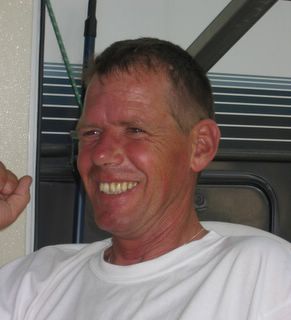
Gadgets indeed.
Nearly 30 years ago, aboard the U.S.S. Lexington, Rick was coming up a ladder at the same time a hatch was coming down. Hatch met head and the result has been three decades of increasingly debilitating seizures. After marrying an incredible woman (my sister), and trying every kind of therapy and medication available, he was accepted as a candidate for a temporal lobectomy at the VA hospital in Madison. He begins with a procedure tomorrow that is designed to open the skull and insert a device designed to make intracranial EEG recordings that are then used to determine exactly where the surgery should be performed. He could emerge seizure-free, but there are obvious risks. It's brain surgery.
Rick has a talent for changing the way those around him view the world. Mostly, he messes with you by refusing to engage in predictable conversation. He is always ready with a one-liner or an odd perspective, delivered in his droll near-mumble. He never responds, "I don't know" to a question. Maybe, "Don't make me lie to you," but never a conventional reply.
If someone begins to rub his shoulders, he is likely to give them the sharp rebuke, "You have exactly 30 minutes to stop that."
And if you mistakenly drink from his water glass, expect to hear, "Don't worry about it, these sores mean nothing."
He is partially responsible for turning me from an insufferably self-righteous apologist to a rhetorical beggar that masquerades a little less frequently as a Pharisee. One summer afternoon, about 20 years ago, when I was at the height of my "I-got-me-some-religion-and-it's-better-than-yours" stage, he stood in my parents' kitchen and declared, "It's not what you're saying so much as how you're saying it." He was right, and I started making changes. I use that line with my students now.
I even wrote a song about him, that will be on a new CD (available soon).
I have a brother who lives down south
He's taking it on the chin
The rug was pulled out from under him
He doesn't know where to begin
He doesn't know
What he's gonna do
His hands are as rough as Mexico
And his dreams are falling flat
He lives next to a Texaco
He swears he'll make it back
To where he wants to be
Sometimes he doesn't see
That he's shaken, not broken
Taking the things unspoken
And making them true
And with a heart as big as Texas
He'll make room for you
He wanted to teach like anything
But the seizures get him down
He likes to hear Bob Dylan sing
And he knows where he's bound
If he weren't around
I don't know what I'd do
Well, he's shaken, not broken...
He smokes without a filter
And he loves without reserve
When things are out of kilter
He's got a belly full of nerve
To do the math
Off the beaten path
Well, he's shaken, not broken...
Saturday evening I stood with Rick on the shores of Lake Mendota, having a chat while he smoked one of his trademark unfiltered Camels. It was a good talk, but what struck me about it was the utter lack of desperation or avoidance. There was no anxiety about the conversation. We had always been honest with each other, and we had never witheld affection on account of machismo. There was no call for a relational crescendo. We had reached fortissimo with a fermata...no stopping us until the Conductor directs otherwise. It was a good way to leave him.
I had no end-of-life epiphanies. I don't think you should have to "live like you are dyin'." You don't need to go skydiving, or Rocky Mountain climbing, or try to go 2.7 seconds on a bull named Fu Manchu. You just need to live with the kind of reckless passion and honesty that, when you face the end, leaves you strangely, yet comfortably, quiet.
Before we left Madison, I took a couple of shots with the digital camera. I wasn't fooling anyone. The pictures were to preserve his image for us, should he not survive the surgery. Rick just grinned and said, "Ahhh, Americans and their gadgets."
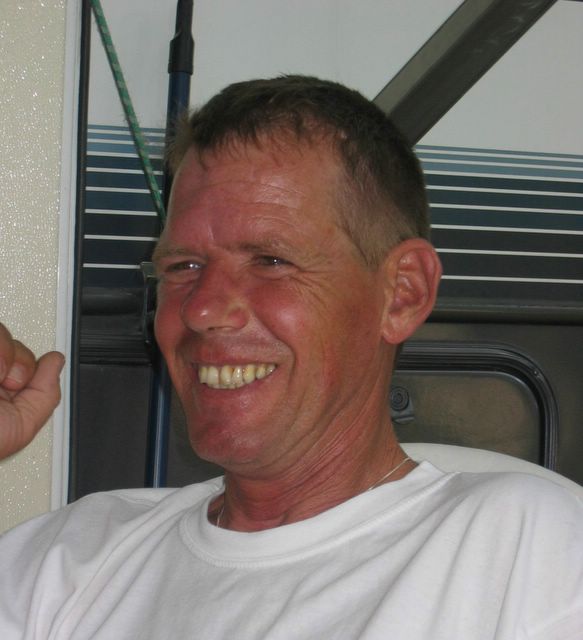
Gadgets indeed.
Tuesday, June 07, 2005
STUCK INSIDE A LANDFILL WITH THE STRANGER BLUES AGAIN
The worst part about home remodeling, besides paying for it, is hauling off the debris. There is a certain catharsis in taking a sledge hammer to plaster, and opening up future possibilities. You are making change, and it is dramatic. There’s nothing like the look on your family’s faces when they come home to find that the living room wall, whose existence they had come to assume, is now only a memory. But the task of cleanup isn’t nearly as romantic.
Some months ago, in the midst of our kitchen remodel job, I had a small demolition load that wasn’t quite large enough to warrant a trip to the dump; so I offered some trailer space to my neighbor, Allen. He took me up on it, and we headed off for one of the local landfill transfer stations.
The transfer station is the place trash stops before its final destination. It is the descending colon of the city’s solid waste system. The station I frequent is a loud, foul-smelling barn with a drainage problem and lots of pigeons. If there’s been any measurable precipitation, you can count on wading ankle deep in detritus. There is a rhythm and an unspoken protocol about the place.
My neighbor, Bill, taught me a nifty drag-off method that reduces time, effort, and disdainful looks from mean trash guys. You attach a chain to some big piece of debris, located near the bottom of the pile toward the front of the trailer. Hook the other end of the chain to the station’s wall, then pull away carefully. If you planned well, this method deposits the majority of your load on the station floor, allowing you a quicker getaway.
On this particular day, Allen and I executed a perfect drag-off, and were back in line for the scale to finish our business. In front of us was an obvious first-timer. He was an older gentleman driving an immaculate pickup, and pulling a questionable trailer full of tons of old house guts. He wore a cheery smile and his own personal hardhat. Hank was going to eat this guy alive.
I chatted with him while we waited. I discovered that he was in his late 70s and had recently undergone heart surgery. The load was from his son’s remodeling project, but he had needed the trailer, so he had offered to deliver it. I helped him navigate the weighing and paying method, all the while wondering how he was going to empty that trailer. I couldn’t let this heart patient suffer the risk to his health and the scorn of Hank, so after consulting with Allen, I offered our help.
He had rigged a drag-off design that managed to dislodge about 20 pounds of the load. The remaining mountain of wet plaster, lath, and insulation proved to be a stubborn burden. After a filthy, exhausting half-hour or so, Allen and I finally emptied the trailer and swept it clean. We turned to go, and the old man pulled out his wallet and started to hand me a five-dollar bill.
“No sir, I won’t take your money,” I said. “We’re all in this together.”
He pushed the money toward me, while his body began to shake in his attempt to choke back the tears. I just patted him on the shoulder and said, “You would do the same for me, if I needed it.” And I turned and walked away, I heard him stifle a sob. I didn’t want to cause him further loss of face, but I was not going to accept payment for doing the right thing.
I guess I turned and left quickly because of the shame. Not the shame he felt, as a man unable to deliver his own load, but the shame I felt for living in a culture where something like this could happen. Where the hell was this guy’s son? Where were his neighbors? Were they unavailable or unwilling? Were they unaware, because he had been too proud or naïve to ask for help?
What impacted me the most was the fact that we live in a society where sacrificial help provokes a grown man to tears. Allen and I didn’t feel like we had done anything heroic or extraordinary. But it was such an uncommon act it overwhelmed him.
Something is wrong. We can do better than this.
To paraphrase Dylan,
Oh, Mama, can this really be the end?
To be stuck inside a landfill
With the stranger blues again.
I’m not suggesting that we should all be imbued with a sense of entitlement, expecting everyone to solve our problems; but we have become so addicted to individualism and market-driven values that we have lost the capacity to accept grace. As a consequence, we dispense less of it as well.
Do you agree that part of our problem today is the inability to accept authentic grace (help, love, mercy…) when it’s offered? What can we do about it?
Some months ago, in the midst of our kitchen remodel job, I had a small demolition load that wasn’t quite large enough to warrant a trip to the dump; so I offered some trailer space to my neighbor, Allen. He took me up on it, and we headed off for one of the local landfill transfer stations.
The transfer station is the place trash stops before its final destination. It is the descending colon of the city’s solid waste system. The station I frequent is a loud, foul-smelling barn with a drainage problem and lots of pigeons. If there’s been any measurable precipitation, you can count on wading ankle deep in detritus. There is a rhythm and an unspoken protocol about the place.
- Pull on the scale.
- Wait for Hank, the sanitation worker with the sunny disposition, to look at you like you are an idiot.
- Register your weight, and wait for Hank’s coveted nod of approval to enter the abyss.
- Pull into the bowels of the place and unload quickly, while Hank and the guys in the big scary trucks look at you like you are an idiot.
- Somewhere in here make several attempts at backing a trailer, while veteran truck drivers scoff, and the incessant warning alarms from reversing front end loaders add to your anxiety.
- Drive around and have Hank weigh you again to determine your payment by how much lighter you are. Oh, yeah, while he's looking at you like you're an idiot.
- Speed away from the place with the windows down.
- Go home and take a China Syndrome shower.
My neighbor, Bill, taught me a nifty drag-off method that reduces time, effort, and disdainful looks from mean trash guys. You attach a chain to some big piece of debris, located near the bottom of the pile toward the front of the trailer. Hook the other end of the chain to the station’s wall, then pull away carefully. If you planned well, this method deposits the majority of your load on the station floor, allowing you a quicker getaway.
On this particular day, Allen and I executed a perfect drag-off, and were back in line for the scale to finish our business. In front of us was an obvious first-timer. He was an older gentleman driving an immaculate pickup, and pulling a questionable trailer full of tons of old house guts. He wore a cheery smile and his own personal hardhat. Hank was going to eat this guy alive.
I chatted with him while we waited. I discovered that he was in his late 70s and had recently undergone heart surgery. The load was from his son’s remodeling project, but he had needed the trailer, so he had offered to deliver it. I helped him navigate the weighing and paying method, all the while wondering how he was going to empty that trailer. I couldn’t let this heart patient suffer the risk to his health and the scorn of Hank, so after consulting with Allen, I offered our help.
He had rigged a drag-off design that managed to dislodge about 20 pounds of the load. The remaining mountain of wet plaster, lath, and insulation proved to be a stubborn burden. After a filthy, exhausting half-hour or so, Allen and I finally emptied the trailer and swept it clean. We turned to go, and the old man pulled out his wallet and started to hand me a five-dollar bill.
“No sir, I won’t take your money,” I said. “We’re all in this together.”
He pushed the money toward me, while his body began to shake in his attempt to choke back the tears. I just patted him on the shoulder and said, “You would do the same for me, if I needed it.” And I turned and walked away, I heard him stifle a sob. I didn’t want to cause him further loss of face, but I was not going to accept payment for doing the right thing.
I guess I turned and left quickly because of the shame. Not the shame he felt, as a man unable to deliver his own load, but the shame I felt for living in a culture where something like this could happen. Where the hell was this guy’s son? Where were his neighbors? Were they unavailable or unwilling? Were they unaware, because he had been too proud or naïve to ask for help?
What impacted me the most was the fact that we live in a society where sacrificial help provokes a grown man to tears. Allen and I didn’t feel like we had done anything heroic or extraordinary. But it was such an uncommon act it overwhelmed him.
Something is wrong. We can do better than this.
To paraphrase Dylan,
Oh, Mama, can this really be the end?
To be stuck inside a landfill
With the stranger blues again.
I’m not suggesting that we should all be imbued with a sense of entitlement, expecting everyone to solve our problems; but we have become so addicted to individualism and market-driven values that we have lost the capacity to accept grace. As a consequence, we dispense less of it as well.
Do you agree that part of our problem today is the inability to accept authentic grace (help, love, mercy…) when it’s offered? What can we do about it?
Friday, May 27, 2005
CRASH OF '71 (continued)
As you saw, the Ghia did not recover; but Dad did. In a few weeks, he was back to his old ways…with one exception: no more little sports cars. As a replacement for the Ghia, he bought a 1970 Lincoln Continental. It was a tank. Anybody attempting to collide with that behemoth would be looking down the mean barrel of some DEEtroit heavy metal.
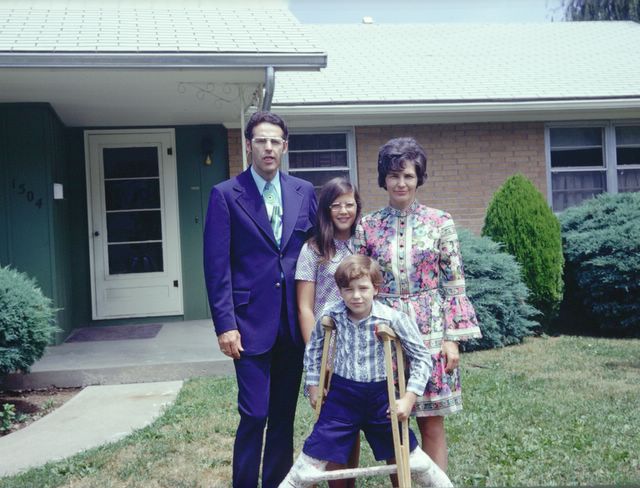
I, however, was not back to normal. I was left with a bit of a limp. For months after the accident, I hobbled around with pain in my knee and hip.
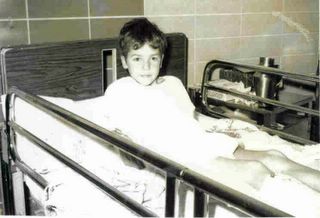
Nobody was quite sure what to do with me, until a fine man named Jess Gwinn sponsored me as a candidate for treatment at Shriner’s Hospital for Crippled Children in St. Louis.
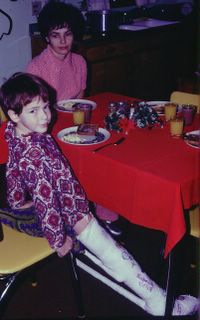
It was at Shriner’s that I was diagnosed with Perthes and put in a plaster cast to position and immoblize my hip, so it would begin to recalcify and form a healthy new hip bone. The doctors said I would have had the condition anyway. The accident brought it to our attention more quickly, and probably made it worse.


Hot Rod Lincoln
Oh, Yeah
I wore the cast for more than two years, traveling to St. Louis for checkups and a new cast every couple of months. It was there, at Shriner’s, where I learned to do tricks in a wheelchair. I met all kinds of deformed and injured children. I felt pretty lucky most of the time. In one of the more bizarre moments at the hospital, Tiny Tim sang “Tiptoe Thru the Tulips” at my bedside.
I walked on crutches for a few months after losing the cast. Fell down the stairs and broke my arm during that period; but that’s another story!
The hip healed. Sorta. I wasn’t Pinocchio; I could walk and run like a real boy. But too much strain on the hip, or a drastic weather change might cause a hitch in my get-along. I was able to play sports, and I developed my own peculiar strut. Kind of like John Travolta with an occasional cob up his ass.
Today, I still have some pain and discomfort. Sometime in the next few years I will have to have a total hip replacement.
What about the stranger?
I turned 40 this year, and I went in search of my narratives. Perhaps it’s my age, but I have come to realize that we are little more than the collection of our stories. So, I asked my parents to tell me about the accident.
It turns out that some of my relatives knew the stranger’s name. We had fallen out of touch with him, but maybe they would know how to reach him. I'm not sure why I wanted to know. I don’t know what I thought I was going to do. I guess I felt like I should go speak to him, thank him for his faith. I suppose part of me wondered if he was real. I have heard lots of stories of people who were rescued or helped in some way, only to find that their savior had mysteriously disappeared.
Jacob wrestled with God, or an angel, and won. At the end of the fight, God renamed him “Israel” and messed with his hip. Gave him a limp. Was this stranger my angel? My god? Was there some message I had missed? What had I become? Who was I supposed to be? Had I wrestled well, or was God still waiting for me to prove myself? I needed to find some kind of answer.
Sometime in 1973, the stranger wrapped his lips around a Smith & Wesson.
I still never found out his name, but my uncle claims to remember the story of the suicide. No one really knows why he did it. Maybe his wife got tired of him living for others and not for himself. Maybe there was no one left to save. Maybe the cumulative weight of all that ferocious love became more than his heart could bear. I don’t know the story. I just know that when I heard it, I wept. I wept for the man I never knew. I wept for the crazy son of a bitch that would pick a strange kid out of a ditch and race for help...to hell with what anyone thought about it.
Do angels kill themselves? I don’t know. Maybe angels don’t just perform beautiful miracles. Maybe they live for awhile and fall hard so we can learn how to live. I know that the stranger’s life has made me learn to not take my rescue lightly. I don’t want to live a life marked by fear or guilt. I want to live a life of gratitude. Ever aware of grace. Whether it be a kid in a ditch, the oppressed outcast, or some poor guy who’s reached the end of his rope. I don’t want to retreat to safety. I want to live with strange passion. I want to pick them up.
I better get a station wagon.
I, however, was not back to normal. I was left with a bit of a limp. For months after the accident, I hobbled around with pain in my knee and hip.

Nobody was quite sure what to do with me, until a fine man named Jess Gwinn sponsored me as a candidate for treatment at Shriner’s Hospital for Crippled Children in St. Louis.
It was at Shriner’s that I was diagnosed with Perthes and put in a plaster cast to position and immoblize my hip, so it would begin to recalcify and form a healthy new hip bone. The doctors said I would have had the condition anyway. The accident brought it to our attention more quickly, and probably made it worse.


Hot Rod Lincoln
Oh, Yeah
I wore the cast for more than two years, traveling to St. Louis for checkups and a new cast every couple of months. It was there, at Shriner’s, where I learned to do tricks in a wheelchair. I met all kinds of deformed and injured children. I felt pretty lucky most of the time. In one of the more bizarre moments at the hospital, Tiny Tim sang “Tiptoe Thru the Tulips” at my bedside.
I walked on crutches for a few months after losing the cast. Fell down the stairs and broke my arm during that period; but that’s another story!
The hip healed. Sorta. I wasn’t Pinocchio; I could walk and run like a real boy. But too much strain on the hip, or a drastic weather change might cause a hitch in my get-along. I was able to play sports, and I developed my own peculiar strut. Kind of like John Travolta with an occasional cob up his ass.
Today, I still have some pain and discomfort. Sometime in the next few years I will have to have a total hip replacement.
What about the stranger?
I turned 40 this year, and I went in search of my narratives. Perhaps it’s my age, but I have come to realize that we are little more than the collection of our stories. So, I asked my parents to tell me about the accident.
It turns out that some of my relatives knew the stranger’s name. We had fallen out of touch with him, but maybe they would know how to reach him. I'm not sure why I wanted to know. I don’t know what I thought I was going to do. I guess I felt like I should go speak to him, thank him for his faith. I suppose part of me wondered if he was real. I have heard lots of stories of people who were rescued or helped in some way, only to find that their savior had mysteriously disappeared.
Jacob wrestled with God, or an angel, and won. At the end of the fight, God renamed him “Israel” and messed with his hip. Gave him a limp. Was this stranger my angel? My god? Was there some message I had missed? What had I become? Who was I supposed to be? Had I wrestled well, or was God still waiting for me to prove myself? I needed to find some kind of answer.
Sometime in 1973, the stranger wrapped his lips around a Smith & Wesson.
I still never found out his name, but my uncle claims to remember the story of the suicide. No one really knows why he did it. Maybe his wife got tired of him living for others and not for himself. Maybe there was no one left to save. Maybe the cumulative weight of all that ferocious love became more than his heart could bear. I don’t know the story. I just know that when I heard it, I wept. I wept for the man I never knew. I wept for the crazy son of a bitch that would pick a strange kid out of a ditch and race for help...to hell with what anyone thought about it.
Do angels kill themselves? I don’t know. Maybe angels don’t just perform beautiful miracles. Maybe they live for awhile and fall hard so we can learn how to live. I know that the stranger’s life has made me learn to not take my rescue lightly. I don’t want to live a life marked by fear or guilt. I want to live a life of gratitude. Ever aware of grace. Whether it be a kid in a ditch, the oppressed outcast, or some poor guy who’s reached the end of his rope. I don’t want to retreat to safety. I want to live with strange passion. I want to pick them up.
I better get a station wagon.
Tuesday, May 24, 2005
CRASH OF '71
I tried to go for a run the other day. We had been experiencing strange weather: cold one day, warm the next...rain, sun, etc. Limping, I returned to the house after just a few blocks. Weather changes do a number on my hip. I suffer from the effects of avascular necrosis of the femoral head, brought on by a childhood case of Legg-Calve-Perthes disease, where the blood supply to the ball joint of the hip is cut off. The hip starts to die, and eventually collapses.
It is particularly acute if you suffer some sort of trauma to the hip.
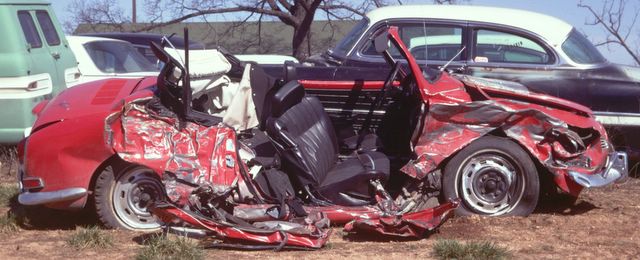
My dad scandalized some of the church folks when he bought a convertible. It was a sweet ride: a bright red Volkswagen Karmen Ghia. But not everyone at the First Baptist Church of Sedalia, Missouri was ready for their pastor to be tooling around town in a ragtop. I mean, it was 1971, and the culture was being destablized enough by ungrateful little punks like John Kerry questioning the wisdom of war in Southeast Asia, and hippies like John Lennon telling us to imagine no religion. The last thing we needed was to see our preacher in a little German car with the wind in his sideburns.
Well, the public indignity was short-lived.
A few months after he bought the Ghia, Dad and I drove down to Thayer, on the Missouri-Akransas border, to see my grandparents. We had a nice visit, and on the way home we took highway 63 from West Plains to Willow Springs. The top was down and the wind was a sedative. I unbuckled and fell asleep leaning against my dad.
When we came to the dogleg turn near Pomona, an approaching car crossed the centerline and headed right for us. There was no escape on the right; the truckstop entrance offered a blunt abutment. Dad tried to swerve to the left to avoid a head-on collision. No good. The oncoming driver corrected at the same time. We met in the middle, with the other car catching the right front of the convertible, peeling my side of the car like a tin can. If I had been sitting upright, I would have taken the force of the impact.
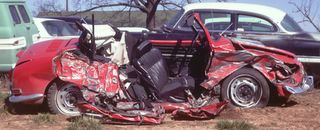
The paramedics said if Dad hadn’t been wearing his seatbelt, he would have been thrown 50 feet out of the car and killed. But, since seatbelts in 1971 only covered the lap, the same restraint almost cut him in two. When the ambulance arrived, they saw he was in a life-threatening condition and loaded him up for transport. Either they didn’t see me crumpled up under the dashboard, or there wasn’t room for both of us in the ambulance...or maybe they thought my injuries were superficial and that I should just shake it off and walk to the hospital; but for some strange reason, they took off without me. That’s right. Six years old and they left me in the ditch.
Enter the stranger. He was driving a big Plymouth station wagon, and he didn’t like the looks of that situation one bit. Without training, permission, or hesitation, he grabbed my semi-conscious body, stuck me in the back of his wagon, and took off for Ozarks Medical Center.
The stranger was apparently accustomed to lending a hand. The car was mostly full of day-laborers. Nobody wanted them fulltime, so he hired them when he could. And they were black. And it was Southern Missouri in 1971. My world was pretty white.
When I woke up in a strange car, with four strange black men staring down at me, and fire shooting through my legs, I screamed like a motherfucker.
I’m sure we made quite a sight: a 1965 Plymouth Valiant Wagon barrelling down the road toward West Plains — breaking the law, carrying outcasts, and crying out for deliverance. I can just hear the stranger, hunched over the wheel of his renegade ambulance, muttering, “The last shall be first. The last shall be first.” Giving the finger to all the doctors, the bigots, and the careful standersby that would rather watch from safety than dive elbowdeep into the shit. He was a man of faith.
His faith delivered me to the hospital, where I stayed for a week or two.
After our odd separation at the scene of the accident, Dad demanded that we share a room. At first the nurses weren’t going to allow it, until he took a break from spitting up blood and threatened to kick somebody’s ass with a bedpan.
The stranger came to visit once. We thanked him, but over time we were preoccupied with our own recovery and forgot his name. His faith gave way to our reality, as faith so often does.
Although I never saw him again, he recently reentered my life.
(Stay tuned for Chapter 2)
It is particularly acute if you suffer some sort of trauma to the hip.
My dad scandalized some of the church folks when he bought a convertible. It was a sweet ride: a bright red Volkswagen Karmen Ghia. But not everyone at the First Baptist Church of Sedalia, Missouri was ready for their pastor to be tooling around town in a ragtop. I mean, it was 1971, and the culture was being destablized enough by ungrateful little punks like John Kerry questioning the wisdom of war in Southeast Asia, and hippies like John Lennon telling us to imagine no religion. The last thing we needed was to see our preacher in a little German car with the wind in his sideburns.
Well, the public indignity was short-lived.
A few months after he bought the Ghia, Dad and I drove down to Thayer, on the Missouri-Akransas border, to see my grandparents. We had a nice visit, and on the way home we took highway 63 from West Plains to Willow Springs. The top was down and the wind was a sedative. I unbuckled and fell asleep leaning against my dad.
When we came to the dogleg turn near Pomona, an approaching car crossed the centerline and headed right for us. There was no escape on the right; the truckstop entrance offered a blunt abutment. Dad tried to swerve to the left to avoid a head-on collision. No good. The oncoming driver corrected at the same time. We met in the middle, with the other car catching the right front of the convertible, peeling my side of the car like a tin can. If I had been sitting upright, I would have taken the force of the impact.
The paramedics said if Dad hadn’t been wearing his seatbelt, he would have been thrown 50 feet out of the car and killed. But, since seatbelts in 1971 only covered the lap, the same restraint almost cut him in two. When the ambulance arrived, they saw he was in a life-threatening condition and loaded him up for transport. Either they didn’t see me crumpled up under the dashboard, or there wasn’t room for both of us in the ambulance...or maybe they thought my injuries were superficial and that I should just shake it off and walk to the hospital; but for some strange reason, they took off without me. That’s right. Six years old and they left me in the ditch.
Enter the stranger. He was driving a big Plymouth station wagon, and he didn’t like the looks of that situation one bit. Without training, permission, or hesitation, he grabbed my semi-conscious body, stuck me in the back of his wagon, and took off for Ozarks Medical Center.
The stranger was apparently accustomed to lending a hand. The car was mostly full of day-laborers. Nobody wanted them fulltime, so he hired them when he could. And they were black. And it was Southern Missouri in 1971. My world was pretty white.
When I woke up in a strange car, with four strange black men staring down at me, and fire shooting through my legs, I screamed like a motherfucker.
I’m sure we made quite a sight: a 1965 Plymouth Valiant Wagon barrelling down the road toward West Plains — breaking the law, carrying outcasts, and crying out for deliverance. I can just hear the stranger, hunched over the wheel of his renegade ambulance, muttering, “The last shall be first. The last shall be first.” Giving the finger to all the doctors, the bigots, and the careful standersby that would rather watch from safety than dive elbowdeep into the shit. He was a man of faith.
His faith delivered me to the hospital, where I stayed for a week or two.
After our odd separation at the scene of the accident, Dad demanded that we share a room. At first the nurses weren’t going to allow it, until he took a break from spitting up blood and threatened to kick somebody’s ass with a bedpan.
The stranger came to visit once. We thanked him, but over time we were preoccupied with our own recovery and forgot his name. His faith gave way to our reality, as faith so often does.
Although I never saw him again, he recently reentered my life.
(Stay tuned for Chapter 2)
Tuesday, May 17, 2005
THE SPACE BETWEEN
Thanks to those of you that contributed to the latest dialogue. It has been an intense week or so. She went home last weekend. She's doing well. She left the hospital with a steel plate in her jaw and a halo brace holding her fractured neck together. What a tough young woman. I pray that she is able to deal with her emotional wounds as well as she has dealt with her physical condition.
Some of you raised some meaningful and provocative questions. Sorry I didn't engage all of them with my typical vigor and verve. The last few days have been filled with final exam prep and an enormous load of papers to grade. I am always a little stricken with malaise at the end of the spring semester. Don't know why. Perhaps it's the stress. Perhaps it's a little like post-partum depression: separating from something you have nurtured for months. We don't finish finals until the end of this week; then I get to sit through a commencement speech by Majority Whip Roy Blunt.
Huh. Whip Roy Blunt.
Whip Roy Blount.
Me like the sound of that.
I have been escaping paper-grading by watching an occasional film. The first escape was My Dinner With Andre. If you haven't seen this 110-minute film about a dinner conversation, you must. Do it now. I'll wait.
Wasn't it great? Can you imagine having another "So, how was your day?" kind of conversation after that?
If you weren't delighted by the dialogue, at least you had to love the fact that Wallace Shawn actually says "inconceivable" like his Vizzini character in Princess Bride.
The next was a revisitation of Amadeus, the film about Wolfgang Amadeus Mozart, that is really about Antonio Salieri: "the patron saint of mediocrity." He's my saint these days.
Speaking of saints, yesterday it was Luther that spoke to my internal and ongoing catholic-protestant struggle. As Protestant-like Catholic author Walker Percy wrote, "One dead, the other powerless to be born."
Was that random enough for you? Back to grading. Oh, hell, everybody gets an A.
Some of you raised some meaningful and provocative questions. Sorry I didn't engage all of them with my typical vigor and verve. The last few days have been filled with final exam prep and an enormous load of papers to grade. I am always a little stricken with malaise at the end of the spring semester. Don't know why. Perhaps it's the stress. Perhaps it's a little like post-partum depression: separating from something you have nurtured for months. We don't finish finals until the end of this week; then I get to sit through a commencement speech by Majority Whip Roy Blunt.
Huh. Whip Roy Blunt.
Whip Roy Blount.
Me like the sound of that.
I have been escaping paper-grading by watching an occasional film. The first escape was My Dinner With Andre. If you haven't seen this 110-minute film about a dinner conversation, you must. Do it now. I'll wait.
Wasn't it great? Can you imagine having another "So, how was your day?" kind of conversation after that?
If you weren't delighted by the dialogue, at least you had to love the fact that Wallace Shawn actually says "inconceivable" like his Vizzini character in Princess Bride.
The next was a revisitation of Amadeus, the film about Wolfgang Amadeus Mozart, that is really about Antonio Salieri: "the patron saint of mediocrity." He's my saint these days.
Speaking of saints, yesterday it was Luther that spoke to my internal and ongoing catholic-protestant struggle. As Protestant-like Catholic author Walker Percy wrote, "One dead, the other powerless to be born."
Was that random enough for you? Back to grading. Oh, hell, everybody gets an A.
Thursday, May 05, 2005
HUG YOUR DAUGHTERS
I just came from the hospital, where I was at the bedside of an incredible young woman. Beautiful. Smart. Funny. She represents everything that gives me hope for the future. Whether she is speaking out against injustice, performing, or making a smartass comment to one of her annoying professors, she is doing it with style and grace.
Early yesterday evening she was viciously assaulted. She was running on a recently completed biking trail on a warm sunny day in a small Midwestern town: a town that was recently named one of the safest in America. She suffered numerous broken bones, cuts, and bruises, not to mention the kind of physical and emotional injuries I cannot begin to understand.
After spending hours with her and her family last night and today, I have this to say: Men, hug your daughters.
Women, you should hug your daughters too. And all of you should hug your sons as well. And, if you don't have children, hug someone else's kids so they know they are loved.
But most of all, men, hug your daughters. Hug them until they start to wonder why you're still hugging them--until it starts to embarrass them--then hug them some more.
Also, men, if you ever have the urge to say something, do something, or look at something that treats women as anything other than the apple of some daddy's eye...Stop it.
Just stop it.
Early yesterday evening she was viciously assaulted. She was running on a recently completed biking trail on a warm sunny day in a small Midwestern town: a town that was recently named one of the safest in America. She suffered numerous broken bones, cuts, and bruises, not to mention the kind of physical and emotional injuries I cannot begin to understand.
After spending hours with her and her family last night and today, I have this to say: Men, hug your daughters.
Women, you should hug your daughters too. And all of you should hug your sons as well. And, if you don't have children, hug someone else's kids so they know they are loved.
But most of all, men, hug your daughters. Hug them until they start to wonder why you're still hugging them--until it starts to embarrass them--then hug them some more.
Also, men, if you ever have the urge to say something, do something, or look at something that treats women as anything other than the apple of some daddy's eye...Stop it.
Just stop it.
Subscribe to:
Posts (Atom)